Understanding the Science Behind Personalised Orthodontic Treatment
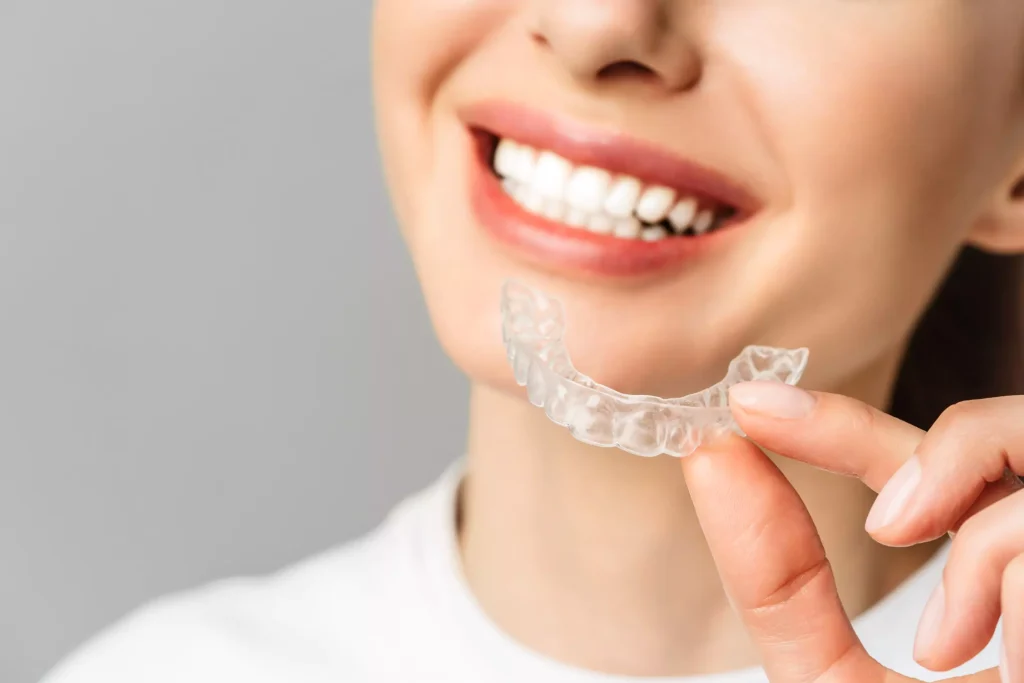
The journey towards a straighter smile is as individual as a fingerprint, with each person’s dental anatomy presenting its own distinctive characteristics and challenges. Modern orthodontic treatment has evolved remarkably to accommodate these variations, with Invisalign Leicester representing one of the most sophisticated approaches to personalised tooth movement. The technology behind these transparent orthodontic devices has revolutionised how practitioners address complex dental misalignments whilst respecting the unique biological responses of each patient.
Unlike traditional orthodontic methods that apply uniform forces across the dental arch, contemporary clear aligner systems utilise advanced digital planning to create a bespoke treatment pathway. This tailored approach acknowledges that teeth don’t simply shift in straight lines but follow complex three-dimensional patterns influenced by bone density, root morphology, and individual tissue response. The precision engineering involved in crafting each sequential aligner ensures that forces are applied at optimal angles and magnitudes for predictable, controlled movement.
Digital Treatment Planning and Biomechanical Precision
The foundation of adaptive aligner therapy begins with comprehensive digital imaging that captures every contour and spatial relationship within the oral cavity. This detailed mapping allows orthodontic specialists to simulate the entire treatment journey before the first aligner is even manufactured. Treatment planning software has become increasingly sophisticated, enabling practitioners to predict how individual teeth will respond to specific force applications and adjust the treatment sequence accordingly.
Each aligner in the series represents a calculated step towards the final desired position, with the material properties and design features carefully calibrated to deliver controlled pressure. The thermoplastic materials used in quality aligner systems possess memory characteristics that maintain consistent force delivery throughout the recommended wear period, typically spanning one to two weeks per stage. This consistency proves crucial for achieving the biological tooth movement that occurs as bone remodels around shifting roots.
Customisation for Complex Movement Patterns
Certain tooth movements present particular challenges in orthodontic treatment, requiring specialised adaptations within the aligner design. Rotation of canines, extrusion of incisors, and root torque adjustments all demand precise force vectors that standard approaches might not adequately address. Providers such as dental practices providing Invisalign work with treatment systems that incorporate strategic attachments—small composite buttons bonded to tooth surfaces—that serve as anchor points for enhanced mechanical advantage during these challenging movements.
The Role of Attachments and Auxiliaries
These precisely positioned attachments transform smooth tooth surfaces into engineered interfaces that allow aligners to grip and apply forces in specific directions. The shape, size, and placement of each attachment are determined by the type of movement required, whether that involves tipping, translation, or rotation. Some movements may also benefit from the strategic use of elastic bands or other auxiliary devices that work in conjunction with the aligners to achieve optimal results within reasonable timeframes.
Biological Response and Treatment Adaptation
The success of aligner therapy extends beyond mechanical engineering to encompass the biological processes that enable tooth movement. When controlled pressure is applied to a tooth, the periodontal ligament experiences compression on one side and tension on the other, triggering a cascade of cellular activity. Osteoclasts resorb bone in areas of pressure whilst osteoblasts deposit new bone in areas of tension, allowing the tooth to gradually migrate through the jaw.
Individual biological responses vary considerably, with factors such as age, bone density, and metabolic health influencing the rate and predictability of tooth movement. This variability necessitates regular monitoring throughout treatment, with practitioners assessing progress and making refinements as needed. The dynamics of tooth movement can sometimes deviate from digital predictions, requiring mid-course corrections through additional aligner stages or modifications to the treatment plan.
Advanced Techniques for Challenging Cases
Particularly complex cases may require sophisticated biomechanical strategies to achieve desired outcomes. Force-driven biomechanics for challenging root movements represent an area of ongoing development within clear aligner therapy, with research continuously refining approaches to movements that historically proved difficult with removable appliances. These advances have expanded the range of malocclusions that can be effectively addressed without resorting to fixed orthodontic appliances.
Achieving Optimal Results Through Personalised Care
The remarkable adaptability of modern clear aligner systems reflects years of research, technological innovation, and clinical refinement. By combining digital precision with an understanding of individual biological responses, contemporary Invisalign treatments can address a vast spectrum of orthodontic concerns whilst accommodating each patient’s unique dental architecture. This personalised approach not only enhances treatment outcomes but also improves comfort and predictability throughout the journey towards a confident, healthy smile.